Building an Inclusive Growth Operating System for India
3/16/202623 min read
Key Highlights
Inclusive growth means everyone gets a fair share of the good things that come from economic development. This also helps fight poverty and makes life better for all sections of society.
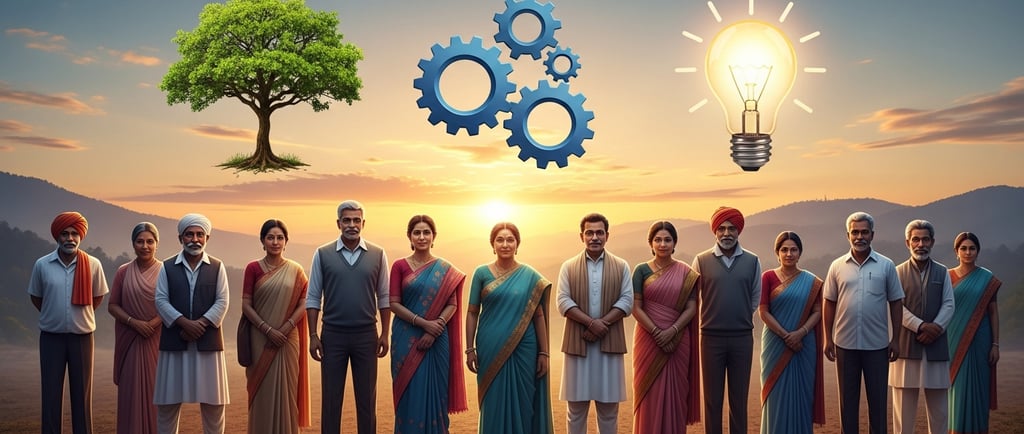
When we talk about building an inclusive growth "operating system" for India, it means using a holistic approach. We need to work with policy, use technology, and support efforts led by people in local areas.
Key steps are to boost skill development, help more people take part in the financial system, and fix regional disparities by working on the right infrastructure projects.
Technology, like digital platforms and AI, is very important. The use of these tools helps bring services to people and open up fair chances for everyone.
We must face challenges like social exclusion and economic inequality if India wants good and lasting progress for all.
Working together through cooperative movements and making local institutions strong can give power to people in the community. This is important to make sure development gets to the last person who needs it.
Introduction
Imagine an India where every person can do well. This is what inclusive growth means. It is a way for economic development that makes sure all people move ahead together. A plan for an "inclusive growth operating system" in India is about making a simple framework. It brings together the right policies, technology, and group work to support fair economic development. With this approach, economic development is not just about getting bigger. It is also about making the changes fair and open for all. That way, it helps long-term and sustainable development for everyone.
Understanding the Concept of an Inclusive Growth Operating System for India
If you look at inclusive growth as the "operating system" for the Indian economy, you can start to see the idea in a new way. A computer's operating system runs all the main tasks and helps different programs work together without any trouble. In the same way, a system for inclusive growth helps bring many social and economic policies together. The goal is to reach fair growth for everyone. This means that all people in India can feel the benefits of development.
The concept of inclusive growth goes further than single programs. It builds a strong system where financial inclusion, education, healthcare, and infrastructure development all link and help each other. This kind of approach is needed to handle the tough problems that face the Indian economy. It also helps in making the country more fair and strong. Now, let's see how this system works in real life.
Defining Inclusive Growth in the Indian Context
In India, inclusive growth means that the advantages of economic growth go to all sections of society. It's not just limited to a few people. It makes sure that everyone has the same chance to take part in and gain from the country's progress. This matches our idea of social justice in the constitution. The goal is to have a level playing field for all, no matter what their background is.
The focus is on the pace and the pattern of growth. It is not enough for the economy to grow fast. The growth must also help lower both poverty and inequality. To do this, there must be more employment opportunities. It is also important to give everyone fair access to resources and markets, so that each person and business can have a good chance.
In the end, social inclusion is the key idea here. The goal is to help vulnerable groups, women, and others who are often left out. It makes sure they take part in India’s development. With this way, economic growth helps bring social justice and makes life better for all.
Key Features of an Inclusive Growth Operating System
An effective inclusive growth operating system stands on a few main parts that work with each other. This way, everyone gets a fair chance. This kind of system is not about just one thing. It is a plan with many sides to it. The goal is to make the development big enough to cover all people and last for a long time. With this, you can see how every person in society has a part in the growth.
This system puts human capital development and economic empowerment first. The goal is to give people the things they need to better their own lives. Here are the main features of this system:
Access to Quality Education and Skills: Everyone should have the chance for good education and skill development programs. This helps people get jobs and feel ready for work.
Widespread Employment Generation: The goal is to make more jobs in different areas. It is not just about sharing money but letting people get work they need.
Comprehensive Financial Inclusion: All people must be able to use banking, credit, and insurance. With these tools, they can save, grow, and feel safe with their money.
Social Equity and Empowerment: Policies have to support those who feel left out. These must help stand up for gender equality and give the same chances to all.
When you bring these features together, the operating system makes a good cycle. If people get better education, they can get better jobs. Financial inclusion makes it easy to handle your money in the right way. Social empowerment helps everyone take part. All these things work together to move the economy ahead.
The Need for an Operating System Approach in India’s Development
India faces many development problems. These problems are linked together and hard to solve with single policies. A holistic approach, called an "operating system" approach, helps manage these hard issues. This approach does not just look at one problem at a time. It brings everything together so all the different parts can work in the same way and help each other.
This plan brings together different ideas to help with inclusive development. A rural road project on its own is good. But it works better when you add financial inclusion. This helps local businesses get credit. Also, skill development programs can train people in the area. When you put these parts together, each one works better. This helps make the most of every policy.
Also, choosing an operating system approach helps with good governance and being open about what is happening. When the system is in one place, it is easy to check progress, spot any missing pieces, and make sure the gains from economic development go to the right people. This complete plan is very important if we want to make India fair and successful for all.
The Importance of Inclusive Growth for India’s Sustainable Development
Inclusive growth is not just the right thing to do, but it is also needed for India to do well in the future. When many people do not get to be part of development, there can be trouble in society, and the economy may not grow as well. Inclusive growth helps the economy stay strong and fair for all.
When we focus on human development, we work to improve health, education, and skills. This helps build a strong base for sustainable development. In this way, everyone in the society can take part in and get something from economic growth. It also helps the country be stable and do better in the future. The next sections will show why human development is so important for sustainable development.
Why Inclusive Growth Matters for India’s Future
India's economic growth in the future will depend on how inclusive it can be. When more people are part of the growth, the country can have a bigger market for things people want to buy. This boosts demand inside the country and helps the economy stay strong, even if things change outside the country. When people get the chance to join in the growth, they do not just rely on others. They also help move the country forward.
Inclusive growth is one of the best ways to keep social cohesion and political stability strong. If there is a lot of inequality, it can cause social unrest and make politics unstable. This is not good for long-term economic development. We can help make society more peaceful by offering fair employment opportunities and lowering the gaps between people. When there is inclusive growth, people feel more united and safe.
In the end, this way is key for real sustainable development. It helps build human capital, keeps weak groups safe, and makes sure the economic growth of the country does not hurt fairness in society. For India to reach its best, each person should feel that they are part of its success.
Link Between Inclusive Growth and Poverty Reduction
There is a clear and strong link between inclusive growth and poverty alleviation. A rise in economic growth can help people get out of poverty. But inclusive development gives a better chance that the poorest people and the most weak in society are part of this change. Inclusive development is not just about money. It also looks at other ways people can be poor or have less than others.
This way of helping gives the poor more ways to learn new things and do more. When they get access to education, healthcare, and money, they can do better for themselves. They can earn more and live a better life. This is a good way to deal with poverty because it does more than just offer a short-term fix; it helps people for a long time.
The main ways that inclusive growth helps fight poverty are:
Creating jobs that are productive so people can have steady work and fair pay.
Setting up strong social safety nets, like health insurance and plans for food security, to help families who are at risk.
Making sure all people have equal access to resources and markets. This plan helps economic development be a strong tool for cutting poverty for many.
Inclusive Growth as a Catalyst for Economic Progress
Inclusive growth is a big driver for the progress in the economy. This kind of growth lets more people join the workforce. It helps boost how much work gets done, and it pushes up demand for things. When a lot of people earn money, save, and spend, it is good for everyone. The whole economy gets better because of inclusive growth.
Focus on human capital is a big reason for this. When we invest in quality education and skill development, people get the tools to be better at work. This helps with employment generation because more jobs can be made. A skilled and educated workforce also pulls in more investment and brings new ideas. With these changes, the economy can move up and do better.
In the end, an inclusive model helps everyone do well. When people have skills and stay healthy, the country sees more economic growth. This growth gives us more money to put back into schools, health, and roads. As this cycle goes on, it makes sure the progress is fast and stays strong. It also helps make things fair for all people, now and in the years ahead.
Major Challenges to Achieving Inclusive Growth in India
India has made a lot of progress. Even so, there are still big problems on the way to getting true inclusive growth. The country still has deep gaps in money and development. Not every area grows in the same way or at the same speed. Some places and some groups are left behind. Because of this, people in these parts can be poor and may not get as many chances as others.
Social exclusion because of caste, gender, and other reasons is still a big problem. These issues keep many people from getting the good things that come with economic growth. This stops us from reaching true equality of opportunity. We need to know about these problems first so that we can fix them.
Economic Disparities and Regional Imbalances
One of the biggest problems for inclusive growth in India is the large gap between rich and poor places. Some states and big cities have seen fast economic growth. But many rural areas have not kept up. This makes a big difference in chances and development for people across the country.
This gap shows up in important signs like per person income, things the state builds, and how people get to basic services. For example, a rich state can have per capita Gross State Domestic Product (GSDP) that is several times more than a state that is not as developed. These regional disparities make it hard to have an equitable distribution of wealth and chances for everyone.
To fix these gaps, the country needs to put money into the regions that are behind. There should be a strong focus on infrastructure development. It is also important to help industries grow in these places and make sure that people in charge do a good job. This will help more people in the country feel the good effects of growth, not just a few.
Social Exclusion and Inequality
Social exclusion is still a big reason why India does not have inclusive growth. Groups like women, minorities, people with disabilities, and lower-caste communities have been left out for a long time. Because of this, these people do not get to join in or benefit from the country's growth.
Inequality is not just about money. It is a tough problem that comes from the rules in society. These rules can stop some people from getting education, healthcare, or fair jobs. For example, gender inequality is a big problem. Women often do not get the same chances as men in work and pay. In 2022, India was ranked 135 out of 146 in the Global Gender Gap Index. This shows there is still a lot to do about this problem.
Promoting social inclusion is not just about money or the economy. We need to work hard to stop unfair treatment. There must be support for vulnerable groups. It is important to stand up for gender equality. Every person should feel that they matter. Everyone needs a fair chance to get ahead. This is the best way to build a society that includes all people.
Infrastructure and Access Barriers
Not having good infrastructure and access can make it very hard for there to be inclusive growth. This problem is even bigger in remote and rural areas. When there are no good roads, electricity, or digital connectivity, people in these places feel cut off. They cannot get to markets. They miss out on education. They also cannot use some of the most important basic services. This kind of physical and digital isolation can keep people in poverty and make inequality worse.
The digital divide is a big problem in the world today. In cities, people enjoy fast internet. But in there, some rural areas have poor digital connectivity. This means many people do not get online learning, government help, or jobs found online. The gap between people who are connected and those who are not, gets bigger because of it.
So, it is important to work on good infrastructure development. There should be programs that help build roads you can use in any weather. People in all places need to get electricity, and the digital divide must be closed. These changes let people in remote areas feel the benefits of the main economy. When these access problems are solved, all regions can grow, and no one is left out.
Technology’s Role in Driving Inclusive Growth
Technology is changing the way for inclusive growth. With digital tools, India can move past old roadblocks that stop development. It can also give services in a better and faster way, even to people who live far away. Digital connectivity helps new paths open up for education, healthcare, and financial services. These things can now reach people who stay in places that are hard to get to.
Technology helps with skill development, creates more jobs, and brings social inclusion. If used in the right way, it can make society fair for all. This happens as more people get a chance to access information and job opportunities. The next sections will show how digital platforms and artificial intelligence help India move toward a more inclusive future by boosting employment generation and social inclusion.
Leveraging Digital Platforms for Social and Economic Inclusion
Digital platforms are now strong tools that help more people join in both social and economic life in India. The government and the private sector are building digital systems that everyone can use. This is helping to remove barriers that have been around for years. When you put Aadhaar for checking identity together with UPI for making payments, it has changed the way financial inclusion works. Now, millions of people can use banking services without trouble.
These platforms help create new employment opportunities. Digital marketplaces, such as Government e-Marketplace (GeM) and Open Network for Digital Commerce (ONDC), make it easy for small business owners and artisans in remote areas to sell their products to people all over the country. This gives them direct access to the market, boosts their income, and helps keep traditional crafts alive.
Digital platforms are helping with social inclusion by bringing important services like education and healthcare to more people. They do this through e-governance portals and mobile apps. Because of this digital change, more people can now be a part of the economy and get the services they need to do well in life.
Artificial Intelligence for Societal Development in India
Artificial intelligence, or AI, has the power to speed up development in society and support inclusive growth in India. AI looks at a lot of data to help make policies that work better. It can also help give people what they need in a better way. The national AI mission wants to set up the right things needed so this technology can help everyone.
AI can help people in many areas and improve human development. In healthcare, AI can find diseases early and make treatment plans for each person. This is very helpful in places that do not have many resources. In education, there are AI tools that build personalized ways to learn. These AI tools also help teachers with skill development and support them with skill development programs.
The main ways that AI can help with inclusive growth are:
Precision Agriculture: Give farmers clear info about their crop yields, how healthy the soil is, and weather changes. This helps them do their work better.
Smarter Governance: Make welfare schemes work better by helping pick the right people who should get them.
Language Translation: Help people talk and get info or services in any language, so everyone gets the same access. With smart use of AI, India can solve some tough development problems and help economic growth reach more people.
Bridging the Digital Divide for Equitable Opportunities
For technology to help include everyone, we need to close the digital divide first. The problem of digital connectivity between rural and city places in India stops people from having equal opportunities. If people in remote areas do not have internet, they miss out on things like new ways to learn, get health care, and do business.
Projects like BharatNet want to bring high-speed broadband to every Gram Panchayat. This is a good step for the country. It is also important to make sure that people can buy devices at a fair price. Helping people learn how to use digital tools is just as important. People need both internet connection and the skills to use it well.
Closing the digital divide is key to making things fair for everyone. When all people have the same access to things online, it gives them many chances. They can learn more, earn money, and take part in what the country does. Bridging the digital divide is not something we can skip. It is needed for a fair and modern India.
Building Blocks of an Effective Inclusive Growth Strategy
To make a good inclusive growth plan, you need more than one thing. This is not done by just one simple action. Instead, it is a mix of different policies and programs that help each other. Some important parts are strong rules and plans, good financial inclusion, and making sure everyone can get education.
These things are the base for fair economic development. When we help people build skills and make sure financial services reach everyone, we can help people join the economy. Now, let's take a closer look at these building blocks.
Policy Frameworks for Inclusive Economic Development
Strong and clear policy frameworks help drive inclusive economic development. These frameworks should aim to promote fairness and make sure that all people share in the benefits of growth. The constitutional provisions in India, like those that ban unfair treatment and call for equal changes for everyone, guide the making of these policies.
Government initiatives help to turn these ideas into real change. There are programs for rural development, support for women, and help for people who are left out. These things are important for a better life. For instance, some rules keep seats for women in local government. Some programs also give support to minority groups. These actions make sure more people feel included in society and politics.
Good governance and effective work are as important as policy making. When things are clear, people take responsibility, and they join in, government initiatives work better. A well planned way of action, along with strong work, helps the country see more inclusive growth.
Integrating Financial Inclusion in Growth Policies
Bringing financial inclusion into the country’s growth plans is an important step for making the economy fair for all. When people can use financial services, they get the chance to save money for later, invest in their businesses, and keep safe from sudden money problems. Financial inclusion helps people and their communities feel stronger and do better in the economy.
The government has launched important programs to help people. The Jan Dhan Yojana is one of the top government initiatives. It has helped many who did not have a bank account get into the banking system. Now, more people can have their money safe in a bank. This has also helped the government send help and support straight to the people who need it most. It cuts down on loss and makes sure the right people get their money.
But the first thing you need is a bank account. Still, for financial inclusion to really work, you need more than that. It should also come with:
Better financial literacy: Teaching people how to use financial services well.
Access to affordable credit: Giving loans to small businesses and entrepreneurs with schemes like MUDRA.
Insurance and pension services: Giving social security with schemes like PMJJBY and APY. When we add these things to our growth plan, we can help more people get the most out of financial inclusion.
Ensuring Education and Skill Development for All
Giving everyone access to education and skill development is a key part of any plan for inclusive growth. It is the best way for people to move up in life. People can get better jobs and live better when they have these skills. We need to make sure there is quality education for all, starting from early school all the way to higher education.
The Samagra Shiksha Abhiyan works to make government schools better. It also tries to give every child a fair chance to go to school. Skill development programs are needed to help young people get ready for jobs today. The Skill India Mission and Pradhan Mantri Kaushal Vikas Yojana (PMKVY) give skill development and vocational training that is useful for many industries.
For India to get the most out of its young population, it needs to put money into its people. This means building up good vocational training and making higher education, like with RUSA, stronger. The education system should help students get useful knowledge and real skills, so they have a better future. This will help India grow by using its human capital in the best way possible.
The Role of Cooperative Movements and Institutions
Cooperative movements and local groups play a key role in helping inclusive growth, even if many people do not see it. These small groups help people and bring the community together from the ground up. They help people work more and feel part of the group. By sharing the work and resources, the group makes it possible to reach goals that one person cannot do alone. This way, they build social cohesion and help people feel they belong.
Cooperatives play a big role in rural development. They help people have better lives, especially in farming and dairy. Making these local groups stronger is important. It helps development to stay longer and really be from inside the community.
Let's look at how these groups help local development. They also make a big, lasting change for the people.
How India’s Cooperative Sector Supports Grassroots Development
India’s cooperative sector has a long and proud story of helping people, especially in rural areas. These groups are owned by their members and run so all members can get the most out of being together. This is why they are good for inclusive growth. They help small producers and workers come together and have more power to bargain as a group. This also helps them reach bigger markets.
In farming, milk production, and loans, cooperatives have changed rural economies. They help with employment generation in local areas and keep the money in the community. By giving services like loans, supplies, and help in selling, cooperatives let farmers and others do better work and earn more money.
Also, the cooperative model helps bring social inclusion. The people who are part of it manage the work. This means that women and those who can feel left out get to say what they want and join in making choices. This way of working lets more people feel heard and counted. It helps make things fair for all and builds a stronger, local economy where people can take part.
Strengthening Local Institutions for Lasting Impact
For development to last, there needs to be strong local institutions. These groups like Panchayats, Self-Help Groups (SHGs), and cooperatives play a big part in the growth of their areas. They are the base for local democracy and development. People in these groups know what their community needs. They are in the best place to make plans and take action that works well for the people around them.
It is very important to make these bodies stronger. This helps the benefits of growth reach everyone, even those who are far away. We can do this by giving them more money, more tasks, and more staff. When local institutions are strong, they help bring people together and support social cohesion. They can also handle local resources well. Plus, they make sure government agencies do their jobs right.
Key strategies that can help make local institutions stronger include these things:
Capacity Building: Giving training and tools to local leaders so they can manage things better.
Promoting Citizen Participation: Getting people in the community to join in planning and help make choices.
Fostering Good Governance: Making sure there is transparency and accountability in the way local leaders work. Putting money into these groups helps create strong, long-term rural development that is shaped by the community and shows good governance.
Economic Policies that Promote Inclusive Growth
Economic policies play a big role in helping a country move toward inclusive growth. The policies should not work only for high GDP growth. They also need to help with fair distribution, more employment generation, and social protection. This asks for tax rules, labor rules, and welfare help to be made with inclusion as the goal.
Good economic policies help to make things fair for everyone. They help protect people who might be more at risk. They also help make sure that all people have a real chance to do well in life. The next parts will talk about some important policies. For example, the text will cover the minimum wage system and social security. These play a big part in building an economy where more people feel included.
The Significance of the Minimum Wage System
A strong minimum wage system is very important for social justice. It also helps with inclusive growth. When there is a law that says workers must get a set lowest wage, it means all workers get enough money. This helps them support their families. Having a minimum wage helps lower poverty and makes things more fair at the lowest part of the economy.
The idea of a minimum wage is very important in India. A lot of people work in the informal sector. Many of them do not have much say about how much they get paid. They can be taken advantage of by others. A minimum wage set by law gives them some protection. This helps keep things fair for those working in the informal sector.
When you make fair employment opportunities, it is important to set the minimum wage at a point that will not stop people from hiring others. If this is done in a careful way, a minimum wage system can help people with low income have more money to spend. That can help boost demand for things in the country, and also make the economy healthier and more fair for everyone.
Social Security Measures and Welfare Schemes
Strong social security measures and welfare plans play a big role in any plan for inclusive growth. These safety nets protect people and families from hard times like sickness, losing a job, or getting old. Having these safety nets is a good investment in the human capital of the nation.
India has started several big welfare schemes to give people a social security net. These programs try to help with many kinds of problems people may face. They make sure that everyone can have a basic way of life. They are important for a strong society where all people get support to do well.
Key examples of these measures include:
Ayushman Bharat (PM-JAY): This is a main health insurance plan. It gives coverage to millions of families who need help. The plan helps with costs for big health problems and treatments in hospitals.
National Social Assistance Programme (NSAP): This plan gives pensions to older people, widows, and people with disabilities.
Mahatma Gandhi National Rural Employment Guarantee Scheme (MGNREGS): This gives work with pay for people who live in villages. All of these plans help make India a safe and caring place for everyone. They show how the country works to help people, by offering things like health insurance and jobs through schemes linked to Mahatma Gandhi.
Sustainable Models and Pathways for Inclusive Growth
To reach inclusive growth, we need ways that last for many years. This means we must focus on development that is fair to all people and good for the planet. We can't plan for a good and bright future for everyone if the Earth runs out of what we need and if the weather keeps changing because of us.
There are several ways to support sustainable and inclusive growth. A few good methods are bringing cities and rural areas together and using green technology. These steps help us balance what the economy needs and what’s good for the earth. If we keep this balance, it will help both us and those who come after us. Now, let’s take a look at some new ideas for inclusive growth and environmental sustainability.
Urban-Rural Integration for Balanced Growth
Building stronger links between cities and rural areas is very important if we want steady and fair economic growth. For many years, most development has happened in big cities. People who live in rural areas do not get the same benefits. Urban-rural connection tries to fix this problem. It is about helping the two work together. Both cities and rural areas can get good things from this relationship, making life better for all and helping economic growth across the country.
This is about building roads and bridges that link village farmers with cities. Programs such as the gram sadak yojana help with this by making roads that people can use all year. When towns and cities are connected, farmers get the chance to sell crops at higher prices. People who live in villages can also travel more easily for jobs and services in cities.
This plan helps build more businesses and services in small towns and villages. It takes away some of the push for people to move to big cities. With more strong small towns and centers for business, the gap between city and village life gets smaller. This leads to better rural development and gives a boost to economic growth. The way this works, growth and development are spread out more evenly, making life better for all.
Innovations in Green Technologies and Environmental Sustainability
Innovations in green technologies are making new ways for us to reach inclusive growth. At the same time, these ways help keep the environment safe. The new green technologies can help grow the economy. They do this by cutting down how much we hurt nature. It is very important to use these green ideas now. That will help us build an economy that is strong and ready for what comes next.
The World Bank says that putting money into environmental sustainability does not stop growth. In fact, it helps the economy grow. Green technologies like renewable energy, waste management, and farming that protects nature can create new jobs for people. These changes also make life better for us. We get cleaner air and water to use and enjoy.
Key areas where green changes are making a difference include:
Renewable Energy: A shift to solar and wind power helps provide clean and cheap electricity. This is helpful for people in remote areas that do not have easy access to the power grid.
Climate-Resilient Agriculture: There are ways of farming that save water and keep soil healthy. These methods help farmers who need to deal with hard weather.
Sustainable Transport: By using electric vehicles and more public transit, people can help lower pollution in cities. Moving to these ways of travel is a key part of a model for sustainable development that is good for both people and the planet.
Conclusion
To sum up, it is important to build an Inclusive Growth Operating System for India. This can help with sustainable development and lower the gap between people. When we work to fix money problems, use new technology, and help local groups, we set up a strong base. This lets everyone have fair chances. Inclusive growth helps people and also moves the country toward a better future. As we try to reach these goals, we need to know that everyone has a part in this change. If you want to help, you can look for ways to join in with work that supports inclusive growth. Get a free consultation today and find out how you can be part of the change!
Frequently Asked Questions
What are the core elements of an inclusive growth operating system for India?
The core elements of an inclusive growth way for India are important. It means making sure economic development is fair for all. The steps to do this are strong policies for quality education and skill development for everyone. It is also about financial inclusion, so all people can be part of the economy. When these parts come together, people in every area get the good of growth. This helps with long-term, strong progress for the country.
How can technology and policy combine to ensure equitable opportunity?
Technology and policy can work together to give equal opportunities to people. They do this by using digital connectivity that lets services reach even the farthest places. With supportive rules, new technology can be used for financial inclusion, better online education, and telehealth. This helps close the gap between cities and villages. It also makes sure that economic growth is something all people can feel and be a part of.
What role do local institutions play in driving inclusive and sustainable development?
Local groups such as panchayats and cooperatives play a big part in rural development and sustainable development. They help the community get involved in making things better. This also brings about social cohesion, since people work together and feel united. These groups make sure development fits what local people need. So, they help growth start from th
Address
#17(9), Ram Colony, West Mambalam
Ashok Nagar East, Chennai (TN) - 600 033. India
+91 99 767 222 99
hello@bymax.co
Socials
© 2026 The Bymax Consulting Group. All Rights Reserved.